
Will GLP-1’s Become the Next Opioid Crisis?
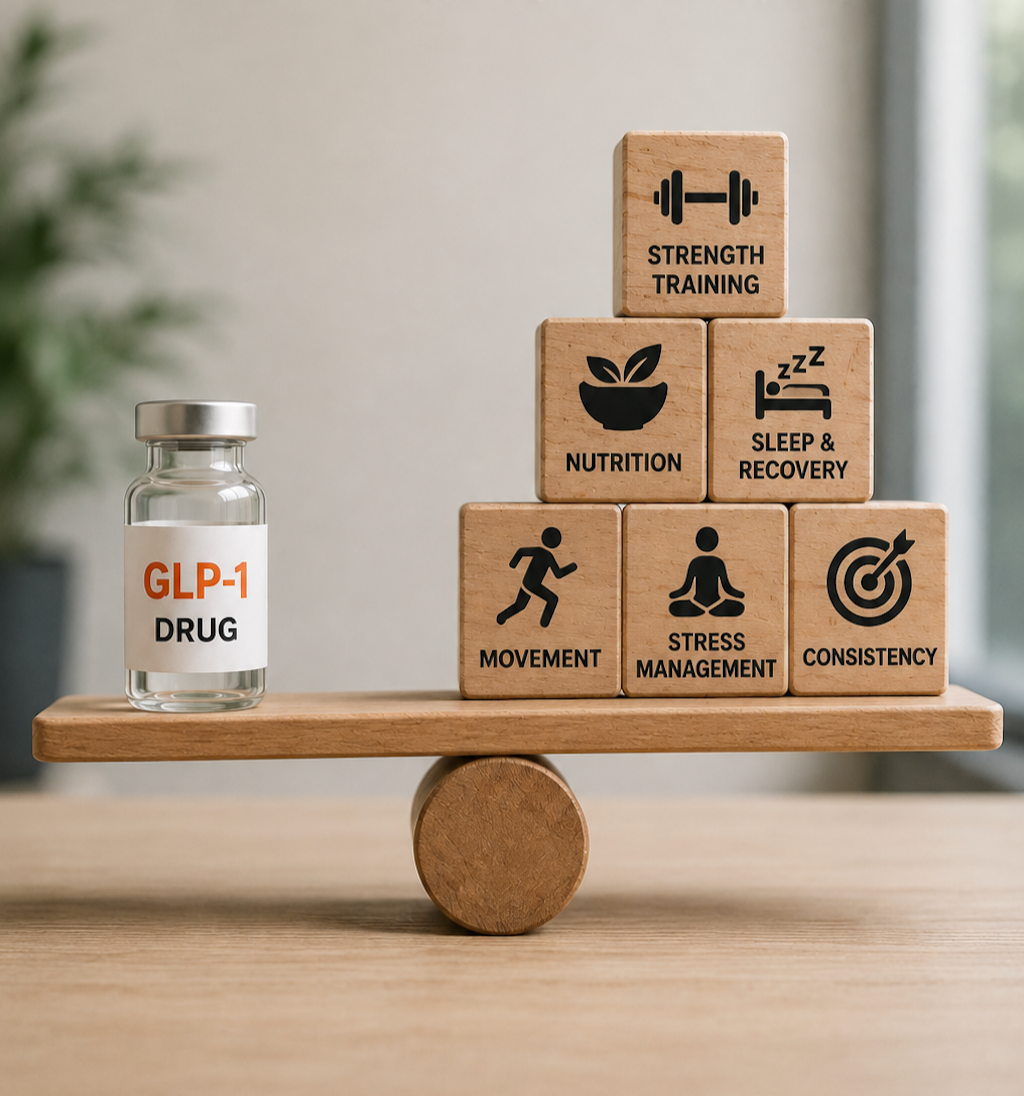
Will GLP-1s Become the Next Opioid Crisis?
GLP-1 receptor agonists have quickly become one of the most powerful tools in modern medicine for weight loss and metabolic health. But like any powerful tool, their value depends entirely on how they’re used. If misapplied, we risk repeating a familiar pattern—one that prioritizes short-term symptom relief over long-term health—and that’s where the comparison to the opioid crisis begins to feel uncomfortably relevant.
The issue isn’t the medication itself. GLP-1s work. They improve insulin sensitivity, reduce appetite and help regulate blood sugar. For many patients, they can be life-changing. The concern is how they’re used—specifically in the absence of foundational lifestyle habits.
What we’re increasingly seeing is weight loss without any consideration of lifestyle choices and habits. People are losing total body mass, not just fat. That can include lean mass, including muscle tissue, and may, in some cases, affect bone density. The scale goes down, but without a plan to preserve lean mass, strength and function can decline. When the medication is removed, the body that was never trained to sustain those changes often regains the weight, but the lean mass and bone density lost along the way may not return as easily.
This risks creating a dependency-like cycle, not because the medication is addictive, but because starting and stopping without building a foundation can lock people into long-term reliance.
Lessons from the Opioid Crisis
The opioid crisis taught us what can happen when symptoms are treated while underlying causes remain. The concern is not that GLP-1 medications are opioids, nor that they create the same form of addiction. The lesson is about how powerful medications can become the default answer when the underlying contributors to poor health are not addressed. GLP-1s risk following a similar path if they are used as a substitute for foundational lifestyle changes rather than as a tool to support them.
Long-term success requires a different model. The base of the pyramid should be sleep, stress management, consistency, high-protein nutrition, whole foods, and resistance training. Pharmacology belongs at the top, as an adjunct to support the foundation, not the foundation itself.
The goal should shift from weight loss alone to improved body composition, preserved muscle mass, metabolic health, and long-term function. GLP-1s can be an incredible catalyst, but only when paired with the behaviours that make their benefits sustainable. The goal is not simply to make the body smaller; it’s to make it stronger, more resilient, and better equipped.
A better approach may be to begin the journey with measurement. A DEXA scan or body composition scan can help establish a baseline for body fat, lean muscle mass, and overall weight. Blood testing through a nurse practitioner or physician can also help assess metabolic and hormonal health, including markers like fasting glucose, fasting insulin, and hemoglobin A1C. From there, the person and practitioner can decide which habits to build first. After four to six weeks of consistently engaging those habits, it may then make sense to discuss adding a GLP-1 as part of the larger plan.
A final cautionary note: prior to starting a GLP-1, consider discussing the intended duration of treatment or establishing a reassessment point with your healthcare practitioner. This creates an opportunity to evaluate whether the progress being made can be sustained through the healthy habits developed along the way. For some people, longer-term GLP-1 treatment may be medically appropriate; the decision to continue, taper, or stop should be individualized with the prescribing clinician.
Without foundational behaviours and habits, the medication doesn’t support the plan—it becomes the plan.